AI Software & Technology for Small Businesses | AI for MSMEs
 By: Albert Michael - Monday, 17 August 2026 15:22:49 • 6 min read
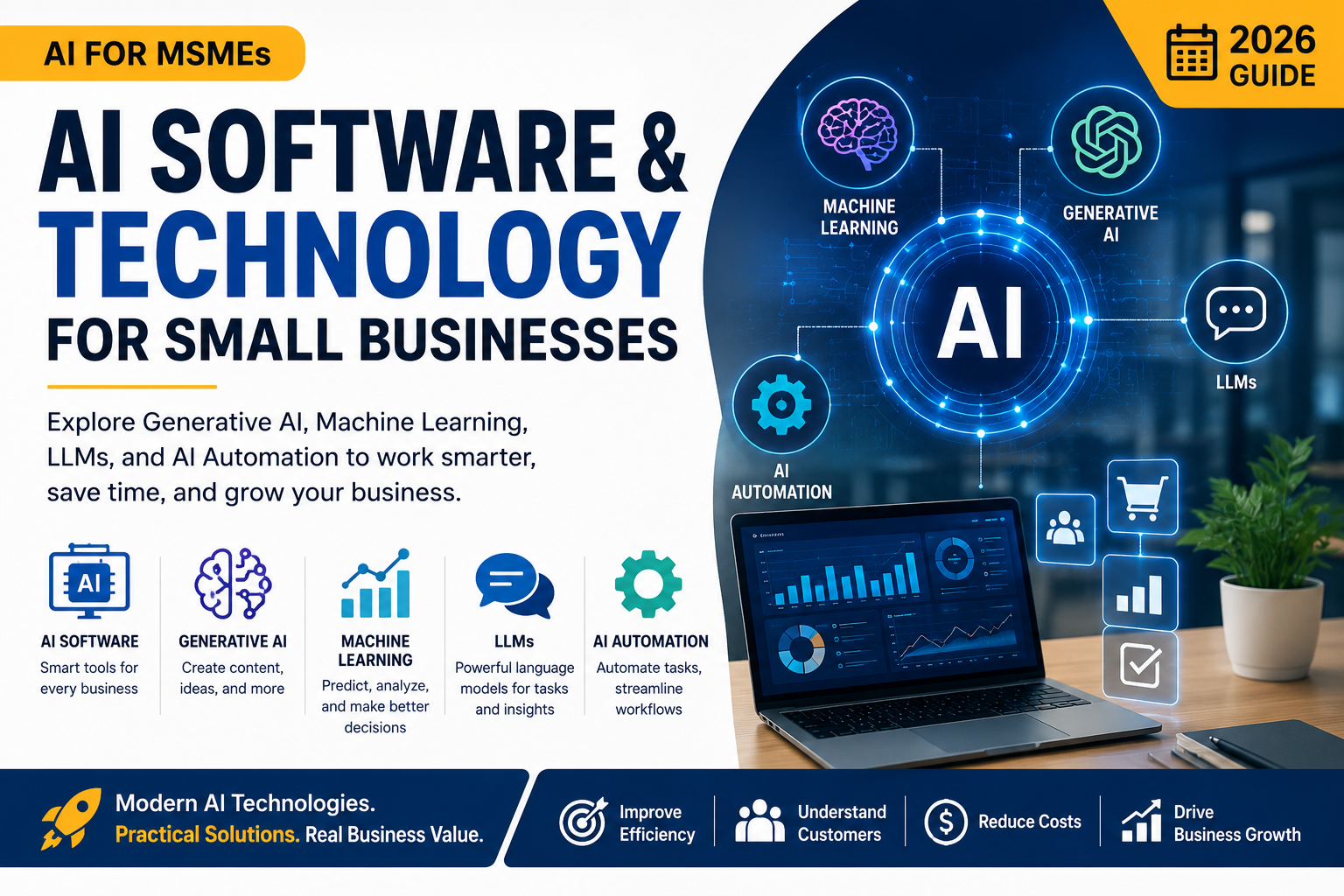
AI FOR MSMEs
AI Software & Technology for Small Businesses
A practical guide to AI software and emerging technologies, including Generative AI, Machine Learning, Large Language Models, and AI automation for small businesses and MSMEs.
For a broader introduction to artificial intelligence and its role in small businesses, explore our complete guide to AI for MSMEs. It provides a comprehensive overview of AI benefits, use cases, adoption strategies, and practical considerations before exploring specific AI software and technologies.
Understanding AI Software & Technology
AI is becoming increasingly accessible to small businesses through software platforms and digital tools. Instead of building artificial intelligence systems from scratch, SMEs can now access AI-powered capabilities through applications designed for marketing, customer service, productivity, analytics, automation, and business operations.
But understanding AI software requires more than simply knowing which tools are available. Business owners also need to understand the technologies behind modern AI, including Generative AI, Machine Learning, Large Language Models, and AI automation.
This AI Software & Technology hub brings together practical guides that explain how these technologies work, what they can do, and how small businesses can evaluate and use them responsibly.
Start Here: What Is AI Software?
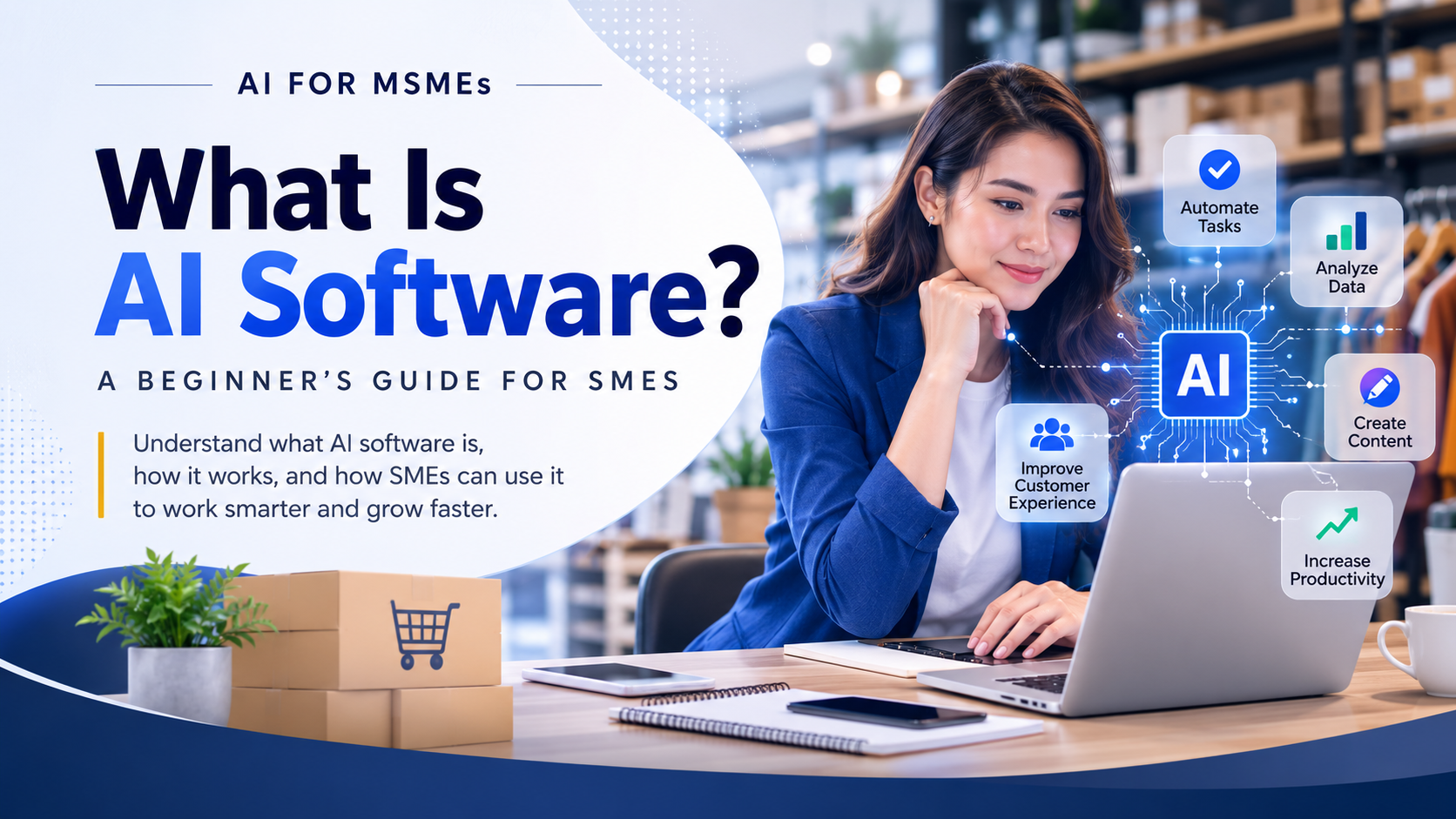
What Is AI Software? A Beginner's Guide for SMEs
Learn what AI software is, how it works, and how small and medium-sized businesses can use AI to automate tasks, improve productivity, analyze data, and support smarter business decisions.
AI Software & Technology: Essential Guides
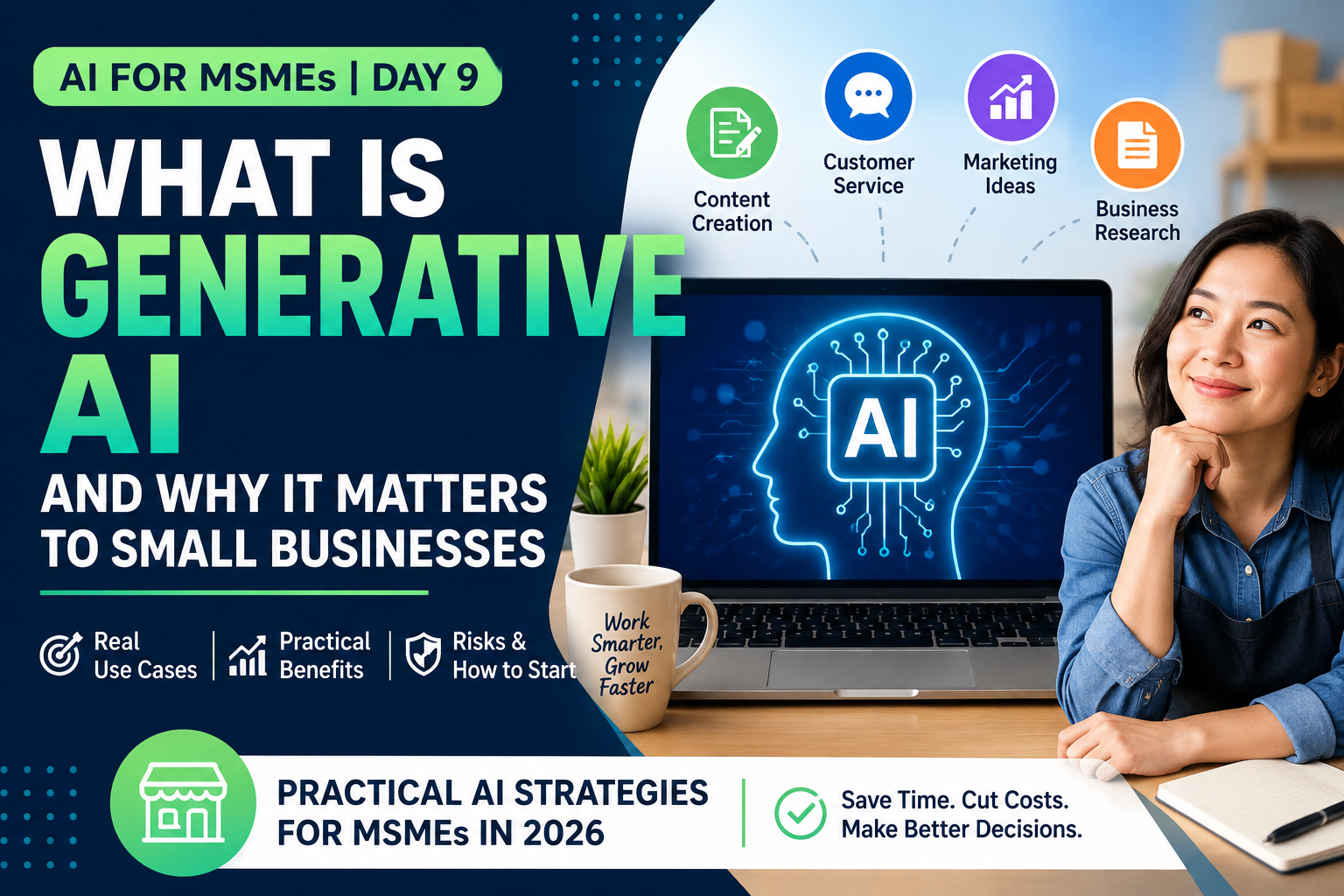
What Is Generative AI and Why It Matters to Small Businesses
Discover what Generative AI is, how it works, and why it matters to small businesses. Learn practical ways to use AI for content creation, marketing, customer service, research, productivity, and business growth.
Read the Generative AI guide →
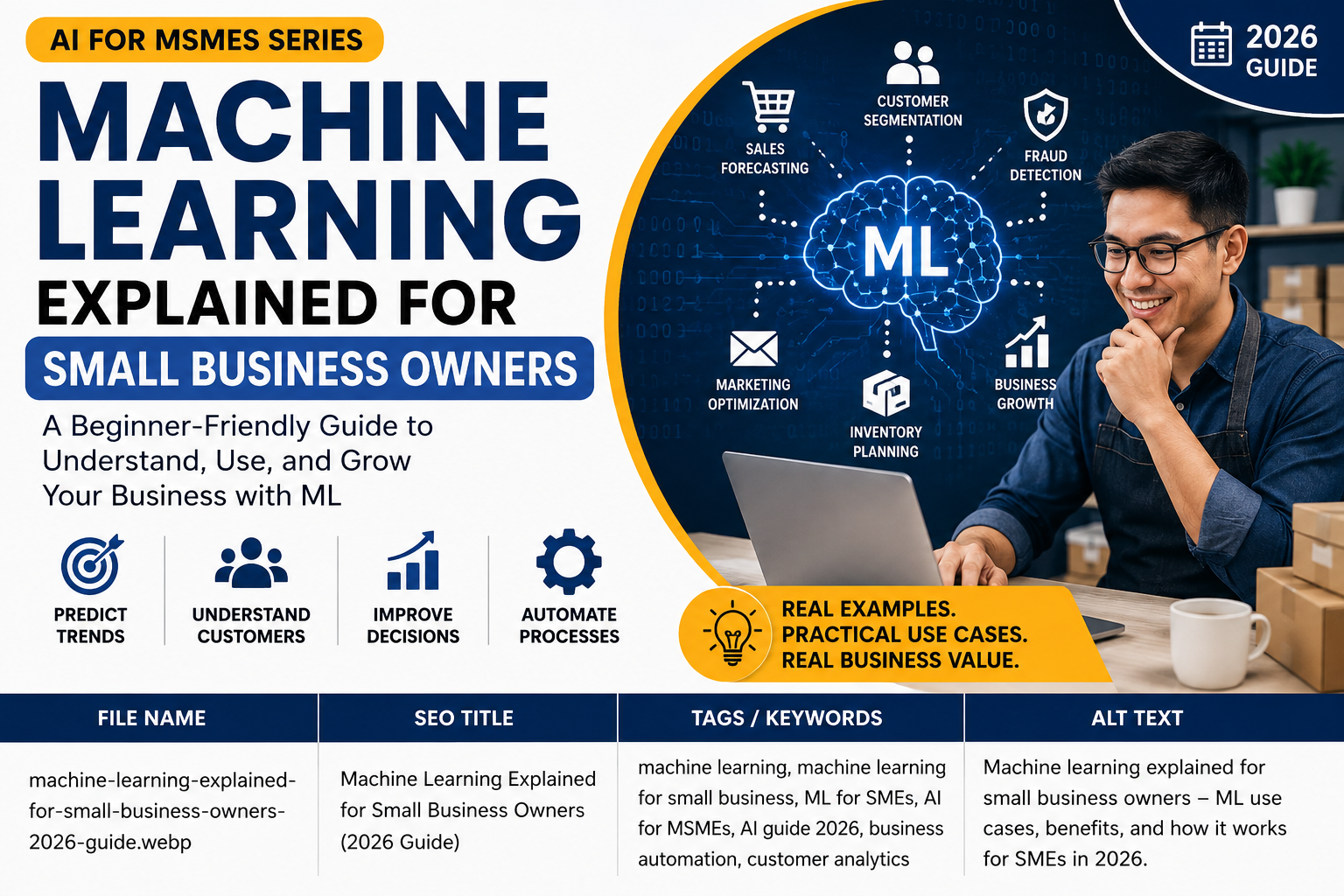
Machine Learning Explained for Small Business Owners
Understand what machine learning is, how it works, and how small businesses can use ML for sales forecasting, customer segmentation, marketing optimization, inventory planning, anomaly detection, and better business decisions.
Read the Machine Learning guide →
What Are Large Language Models (LLMs)?
Learn how Large Language Models work, why they power many modern AI applications, and how businesses can use LLM technology for content, research, customer service, knowledge management, and productivity.
Read the LLM guide →
What Is AI Automation?
Explore how AI automation combines artificial intelligence with business workflows to reduce repetitive work, streamline operations, improve productivity, and help small businesses scale more efficiently.
Read the AI Automation guide →
The AI Software & Technology Learning Path
1. Understand AI Software — Learn what AI-powered software is and how modern business applications use artificial intelligence to solve practical problems.
2. Explore Generative AI — Understand how Generative AI creates text, images, code, and other content and how SMEs can use it responsibly.
3. Understand Machine Learning — Learn how machines identify patterns in data and use those patterns for predictions, classifications, recommendations, and business insights.
4. Understand Large Language Models — Explore the technology behind many modern AI assistants, chatbots, writing tools, research systems, and business applications.
5. Explore AI Automation — Learn how AI can be connected with business workflows to automate repetitive processes and improve operational efficiency.
How Small Businesses Should Think About AI Technology
Adopting AI technology should not begin with the question: "Which AI tool is the most popular?"
A better starting point is: "Which business problem do we need to solve?"
Business Problem → AI Technology → Software Solution → Human Oversight → Measure Results
This approach helps small businesses select technology based on practical business needs rather than adopting AI simply because a tool is trending.
AI Software vs. AI Technology
AI software and AI technology are related but should not be treated as exactly the same thing.
AI technology refers to the underlying methods and capabilities that make intelligent systems possible, including machine learning, neural networks, natural language processing, computer vision, and large language models.
AI software applies those technologies through products and applications that businesses can actually use.
For example, a business owner does not necessarily need to build a machine learning model. Instead, they may use business software that already incorporates machine learning for forecasting, recommendations, customer analysis, or automation.
Choosing the Right AI Technology for Your Business
Different AI technologies are designed for different types of problems.
Generative AI can be useful for content creation, summarization, research, brainstorming, and communication.
Machine Learning can help with prediction, classification, forecasting, customer analysis, and pattern recognition.
Large Language Models can support natural-language tasks such as writing, research, document analysis, knowledge management, and conversational interfaces.
AI Automation can connect intelligent capabilities with workflows to reduce repetitive manual processes.
The best solution depends on the business problem, available data, budget, workflow, technical requirements, and expected return on investment.
Explore More AI for MSMEs
Start by exploring our AI Fundamentals for Small Businesses hub to learn the essential concepts, benefits, challenges, trends, and practical considerations before adopting AI.
AI Marketing — AI for content creation, campaigns, customer insights, personalization, and marketing automation.
AI Sales & Customer — AI for sales processes, customer service, personalization, lead management, and customer relationships.
AI Finance — AI applications for financial analysis, forecasting, bookkeeping, reporting, and business decisions.
AI Operations — AI for workflows, productivity, process optimization, automation, and daily business operations.
AI Tools — Practical AI software and tools that businesses can use to solve specific business problems.
AI by Industry — Explore how AI software and technologies can be applied across different industries and business models.
From AI Software to Intelligent Business Systems
AI software is becoming an increasingly important part of the modern business technology stack. Small businesses no longer need to build every AI capability internally to benefit from artificial intelligence.
Instead, SMEs can evaluate existing AI-powered software, understand the technologies behind those products, identify appropriate use cases, and gradually integrate AI into their workflows.
The most effective approach is to start small, measure results, protect business and customer data, and maintain appropriate human oversight.
As AI technology evolves, business owners who understand the difference between AI software, Generative AI, Machine Learning, LLMs, and AI automation will be better positioned to evaluate new tools and make informed technology decisions.
Build Your AI Technology Stack Step by Step
Businesses do not need to adopt every AI technology at once. A practical technology strategy can develop gradually based on business priorities.
Start with AI Software — Understand the tools already available for your business.
Explore Generative AI — Identify opportunities for content, communication, research, and productivity.
Understand Machine Learning — Learn how predictive and analytical AI can turn business data into useful insights.
Explore LLMs — Understand the technology powering many modern AI assistants and language-based applications.
Implement AI Automation — Connect AI capabilities with workflows where automation can create measurable value.
Understand the technology, choose the right software, solve real business problems, and build your AI capabilities step by step.