Ceuta Migration Crisis: Thousands Cross Into Spanish Enclave as Humanitarian Emergency Unfolds
 By: Albert Michael - Friday, 31 July 2026 20:03:48 • 11 min read
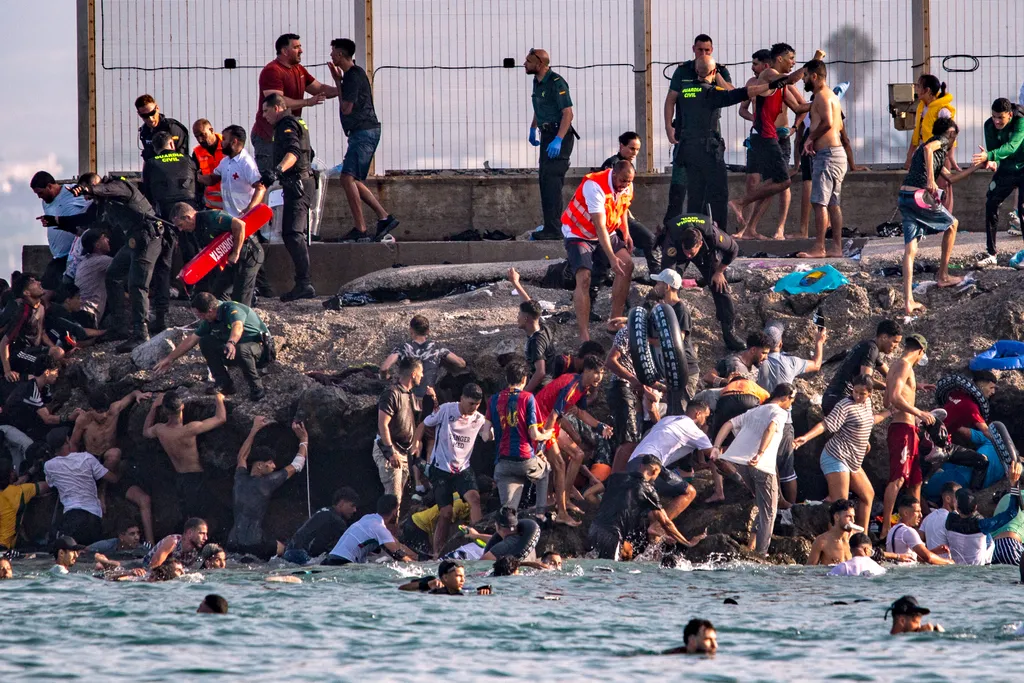
Ceuta Faces New Migration Crisis as Thousands Cross From Morocco Into Spanish Territory
Spain's North African enclave of Ceuta is facing one of its most significant migration emergencies in recent years after thousands of people crossed into the territory from neighboring Morocco within a short period, placing enormous pressure on local authorities, emergency services, and humanitarian organizations.
The sudden influx has transformed the small coastal city into the center of an unfolding humanitarian and political crisis. Reception facilities quickly reached capacity as migrants arrived by land and sea, while public spaces including parks and streets became temporary gathering points for many of the new arrivals.
Local officials described the situation as unprecedented, warning that the city's infrastructure was struggling to cope with the scale of the arrivals. Emergency personnel have been working continuously to provide shelter, food, medical assistance, and security as authorities attempt to restore order.
The crisis has also drawn renewed international attention to Ceuta's unique position as one of Europe's only land borders with Africa—a gateway that has long attracted migrants hoping to reach the European Union in search of safety, employment opportunities, and improved living conditions.
Ceuta at the Center of Europe's Migration Challenge
Located on the northern coast of Africa, Ceuta is a Spanish autonomous city separated from mainland Spain by the Strait of Gibraltar. Together with Melilla, it represents the European Union's only permanent land border with the African continent.
Although geographically surrounded by Morocco, Ceuta has remained under Spanish administration for centuries. Its strategic location has made it both an important commercial hub and one of Europe's most closely monitored external borders.
Thousands of people cross legally between Morocco and Ceuta every day for work, trade, and tourism. However, the city has also become a focal point for irregular migration, particularly during periods of political tension or economic hardship.
In response to previous migration waves, Spain has invested heavily in border infrastructure, including reinforced fencing, surveillance systems, maritime patrols, and increased security personnel. Despite these measures, the latest surge demonstrates that migration pressures remain a complex challenge extending beyond physical border controls.
A Sudden Surge Overwhelms Local Capacity
The latest wave of arrivals unfolded rapidly, catching local authorities by surprise. Within hours, emergency accommodation centers reported reaching maximum capacity, forcing officials to establish temporary assistance points throughout the city.
Humanitarian workers, volunteers, and local government agencies coordinated efforts to distribute food, drinking water, clothing, and medical assistance to migrants arriving in difficult physical condition after crossing the border.
Emergency medical teams were also deployed to assist individuals suffering from dehydration, exhaustion, and injuries sustained during the crossing.
The humanitarian situation became even more concerning following reports that dozens of people lost their lives during attempts to reach Ceuta by sea, highlighting the dangers faced by migrants undertaking risky journeys across the coastline.
Authorities continue working to verify casualty figures while rescue operations remain active along the surrounding coastline.
Local Government Declares Humanitarian Emergency
Ceuta's regional leadership has described the situation as an extraordinary humanitarian emergency requiring immediate support from Spain's central government.
Officials warned that municipal resources alone cannot sustain such a rapid increase in population, particularly given the city's relatively small geographic size and limited public infrastructure.
Emergency response teams have focused on balancing humanitarian assistance with public safety, ensuring migrants receive essential care while maintaining security throughout the city.
Additional personnel from national agencies have been deployed to reinforce local law enforcement and assist with logistics, identification procedures, and emergency operations.
Spanish authorities have also emphasized that protecting human life remains a priority while efforts continue to manage the broader migration situation.
Morocco Calls for an Orderly Response
Moroccan officials have stated that they favor legal, safe, and orderly migration while encouraging citizens who crossed into Ceuta irregularly to return through appropriate legal channels.
Government representatives stressed that cooperation between neighboring countries remains essential for managing migration flows and preventing further humanitarian tragedies.
Both Madrid and Rabat have maintained communication as officials seek to stabilize the situation, coordinate border management, and reduce additional unauthorized crossings.
Although migration has periodically strained diplomatic relations between the two countries, both governments have publicly expressed support for continued dialogue and cooperation.
Spanish Government Mobilizes National Response
Spain's central government has responded by deploying additional security personnel and military support to reinforce operations in Ceuta.
National authorities say their immediate priorities include restoring public order, strengthening border management, providing humanitarian assistance, and coordinating with Moroccan officials.
Senior government leaders have also traveled to the enclave to assess conditions firsthand and evaluate the resources required to address both immediate needs and longer-term migration management.
Officials continue to monitor developments closely as emergency operations remain underway.
Why Are So Many Migrants Crossing Into Ceuta?
While authorities are still investigating the precise reasons behind the latest surge, analysts believe several overlapping factors have contributed to the dramatic increase in crossings.
Economic hardship continues to be one of the strongest drivers of migration in North Africa. Rising living costs, limited employment opportunities, particularly among younger people, and broader economic uncertainty have encouraged many individuals to seek better prospects across Europe's southern frontier.
Migration experts also point to the influence of social media, where information—both accurate and misleading—can spread rapidly. Rumors suggesting that migrants who successfully reach Spanish territory are more likely to remain in Europe often encourage additional attempts, even when legal procedures remain uncertain.
At the same time, human smuggling networks are believed to exploit changing circumstances by encouraging risky crossings and profiting from vulnerable individuals seeking opportunities abroad.
The Role of Recent Legal Developments
Spanish officials have indicated that a recent judicial ruling may have unintentionally influenced migration patterns.
The decision reaffirmed that individuals arriving in Spanish territory must receive due legal process before any return procedures are carried out. While the ruling did not legalize irregular migration or guarantee residency rights, its interpretation on social media appears to have created confusion among some prospective migrants.
According to Spanish authorities, misinformation circulating online may have encouraged people to believe that successfully reaching Ceuta would automatically increase their chances of remaining in Spain.
Officials continue to stress that every case is assessed individually under Spanish, European Union, and international law.
Economic Pressures Continue to Drive Migration
Beyond legal considerations, structural economic conditions remain a significant factor behind migration across the Mediterranean region.
Many young people in Morocco and neighboring countries face persistent unemployment, underemployment, and limited opportunities for economic advancement. These challenges have intensified interest in migration as families search for greater financial stability.
For many migrants, Europe represents not only the possibility of employment but also access to education, healthcare, and improved long-term living conditions.
Researchers note that migration decisions are rarely driven by a single cause. Instead, economic challenges often combine with family considerations, political stability, climate pressures, and personal aspirations.
Humanitarian Organizations Express Concern
International humanitarian organizations have closely monitored the situation, emphasizing the need to prioritize the protection of human life during border management operations.
Relief groups have called for adequate shelter, medical assistance, food distribution, and protection for vulnerable individuals, including minors and families who may require specialized support.
Human rights advocates have also urged authorities to ensure that asylum procedures comply with international legal standards while balancing national security responsibilities.
Medical volunteers working in the area continue providing emergency care to migrants suffering from dehydration, fatigue, and injuries sustained during dangerous sea crossings.
Migration Remains a Shared European Challenge
The developments in Ceuta highlight broader migration challenges facing the European Union.
Countries located along Europe's southern borders frequently experience sudden increases in irregular arrivals due to their geographic proximity to North Africa and the Mediterranean Sea.
European policymakers continue debating how to balance humanitarian obligations with effective border management, international cooperation, and long-term migration reform.
Many experts argue that sustainable solutions require stronger partnerships with countries of origin and transit, expanded legal migration pathways, investment in economic development, and coordinated efforts against human trafficking organizations.
Political Debate Intensifies in Spain
The migration emergency has quickly become a major political issue within Spain.
Opposition parties have criticized the government's handling of border security, arguing that stronger preventive measures are needed to reduce irregular migration and improve emergency preparedness.
Meanwhile, government officials have defended their response, emphasizing that humanitarian responsibilities must remain central while maintaining national security and respecting international legal obligations.
The debate reflects broader discussions taking place across Europe, where immigration policy remains one of the continent's most closely watched political issues.
Regional and International Reactions
Neighboring European countries have also been closely following developments in Ceuta.
Several governments announced plans to review border monitoring measures while reaffirming their commitment to cooperation within the European Union on migration policy.
International observers note that events in Ceuta may influence future discussions regarding border management, asylum procedures, and joint efforts to combat human smuggling across the Mediterranean.
Diplomatic engagement between Spain and Morocco is expected to continue as both countries seek practical solutions that address humanitarian concerns while improving border coordination.
Looking Beyond the Immediate Crisis
Although emergency operations remain focused on immediate humanitarian needs, policymakers increasingly recognize that long-term solutions will require addressing the underlying drivers of migration.
Economic development, employment opportunities, education, regional stability, and legal migration pathways are widely viewed as essential components of any sustainable strategy.
Experts also stress that international cooperation will remain critical, as migration increasingly involves interconnected political, economic, humanitarian, and security considerations that extend far beyond national borders.
As authorities continue responding to the latest developments in Ceuta, the crisis serves as another reminder that migration remains one of Europe's most complex and enduring policy challenges.
What Happens Next?
Spanish authorities are expected to continue reinforcing security operations in and around Ceuta while working closely with Moroccan officials to prevent further unauthorized crossings. Additional humanitarian assistance is also likely to remain in place as reception centers continue processing newly arrived migrants.
In the coming weeks, officials will assess asylum applications, determine the legal status of individuals who entered the enclave, and coordinate with relevant international organizations where necessary.
At the diplomatic level, Spain and Morocco are expected to maintain ongoing dialogue aimed at strengthening border cooperation, combating human trafficking networks, and preventing future humanitarian emergencies.
Migration experts caution that while emergency measures may reduce immediate pressure, they are unlikely to address the broader forces driving irregular migration across the Mediterranean.
Why Ceuta Matters Beyond Spain
Although Ceuta covers less than 20 square kilometers, its strategic location gives it outsized importance in European migration policy.
As one of the European Union's only land borders with Africa, developments in Ceuta are closely monitored by governments, humanitarian organizations, and policymakers across Europe. Events in the enclave often shape wider discussions about border security, asylum systems, migration management, and international cooperation.
The latest surge also underscores how local events can quickly evolve into regional political issues, affecting diplomatic relations and prompting policy debates far beyond Spain's borders.
For many observers, Ceuta represents the broader challenge of balancing humanitarian responsibilities with national security and effective border governance.
Conclusion
The recent influx of migrants into Ceuta highlights the complex realities surrounding migration in the Mediterranean region. What began as a sudden increase in border crossings has evolved into a humanitarian, political, and diplomatic challenge involving multiple governments and international stakeholders.
While emergency responders continue assisting those already in the enclave, authorities face the difficult task of managing border security, protecting human life, and addressing the legal and humanitarian dimensions of migration.
Experts agree that lasting solutions will require more than short-term emergency responses. Greater international cooperation, expanded legal migration pathways, stronger action against smuggling networks, and long-term economic development in countries of origin are all expected to play an important role in reducing future migration pressures.
As the situation continues to develop, Ceuta remains a symbol of one of Europe's most pressing policy challenges—finding sustainable solutions to migration while upholding humanitarian values and international law.
Frequently Asked Questions
Why is Ceuta important?
Ceuta is a Spanish autonomous city located on the northern coast of Africa. Together with Melilla, it forms the European Union's only permanent land border with the African continent, making it a key gateway for migration into Europe.
Why are migrants crossing into Ceuta?
Migration is driven by a combination of economic hardship, unemployment, hopes for better opportunities, misinformation shared online, and the activities of human smuggling networks. Authorities continue investigating the factors behind the latest surge.
How has Spain responded?
Spain has deployed additional security personnel, reinforced humanitarian assistance, and increased coordination with Moroccan authorities while continuing to process migrants under national and European legal procedures.
What role does Morocco play?
Morocco works with Spain on border management and has stated that it supports safe, legal, and orderly migration while discouraging unauthorized crossings.
Why is this crisis attracting international attention?
The events in Ceuta affect not only Spain but also the European Union's broader migration policy, border security strategy, and diplomatic relations with neighboring countries.